The Art of Choosing a Home Fragrance
“I’m looking for a candle as a gift… but I have absolutely no idea what they’d like.”
We hear some version of this in the store all the time.
And it’s understandable. You walk up to a collection of candles and suddenly you’re choosing between bergamot, cedarwood, jasmine, amber, neroli, vanilla, oud and half a dozen other things you may or may not know what they actually smell like.
The good news? You don’t need to be a fragrance expert to make a good choice.
Much like choosing wine, fragrance is personal. There isn’t a best fragrance any more than there’s a wine everybody prefers. But knowing a few basics can make choosing something you — or someone else — will love considerably easier

Start with the fragrance family
One of the easiest ways to navigate fragrance is to forget about individual ingredients for a moment and think about the overall style.
Fresh & Citrus
Think lemon, lime, bergamot, grapefruit, sea salt and fresh herbs. Clean, bright and uplifting. These fragrances work particularly well in kitchens, bathrooms and open living spaces.
Floral
Rose, jasmine, gardenia, peony and other florals can range from light and delicate to rich and heady. If the person you’re buying for loves flowers or floral perfumes, you’re already heading in the right direction.
Woody & Earthy
Cedarwood, sandalwood, oud, leather, patchouli and amber tend to create warmer, deeper fragrances. They’re great for living rooms, studies and bedrooms, and often appeal when you’re looking for something less traditionally floral.
Warm & Gourmand
Vanilla, caramel, coconut, spices and other delicious-sounding notes live here. They’re comforting, inviting and sometimes quite indulgent. If you’ve ever wondered why a candle can suddenly make you want dessert, this category may be responsible.
These aren’t rigid rules. Many of the most interesting fragrances cross several families.
That’s part of the fun

What’s with all the “notes”?
This is where fragrance gets a little more interesting.
A well-developed fragrance is rarely just one smell.
Something that initially appears fresh and citrusy might reveal florals underneath before settling into warmer woods, amber or musk. Perfumers often describe these as top, middle and base notes.
You certainly don’t need to memorise them.
But understanding that fragrances can be layered helps explain why two candles both labelled “vanilla” can smell completely different.
It’s also why we encourage people to actually smell a few fragrances rather than choosing entirely from the name on the box.
Your nose gets a vote.
So what makes one candle different from another?
This is worth understanding, particularly when candle prices can vary enormously.
The answer isn’t simply the label on the front.
Wax formulation, wick quality, the amount and quality of fragrance, how that fragrance has been developed, manufacturing and testing, burn performance and where and how the product is made can all contribute to the finished candle.
A good candle ultimately needs to do two jobs.
It needs to burn well, and it needs to fragrance the space well.
That second part is known as scent throw.
Some people love walking into a room and immediately noticing the fragrance. Others prefer something much more subtle in the background. Neither is better — they’re simply different preferences.
Room size matters too. A fragrance that feels quite powerful in a small bedroom may be beautifully subtle in a large open-plan living area.
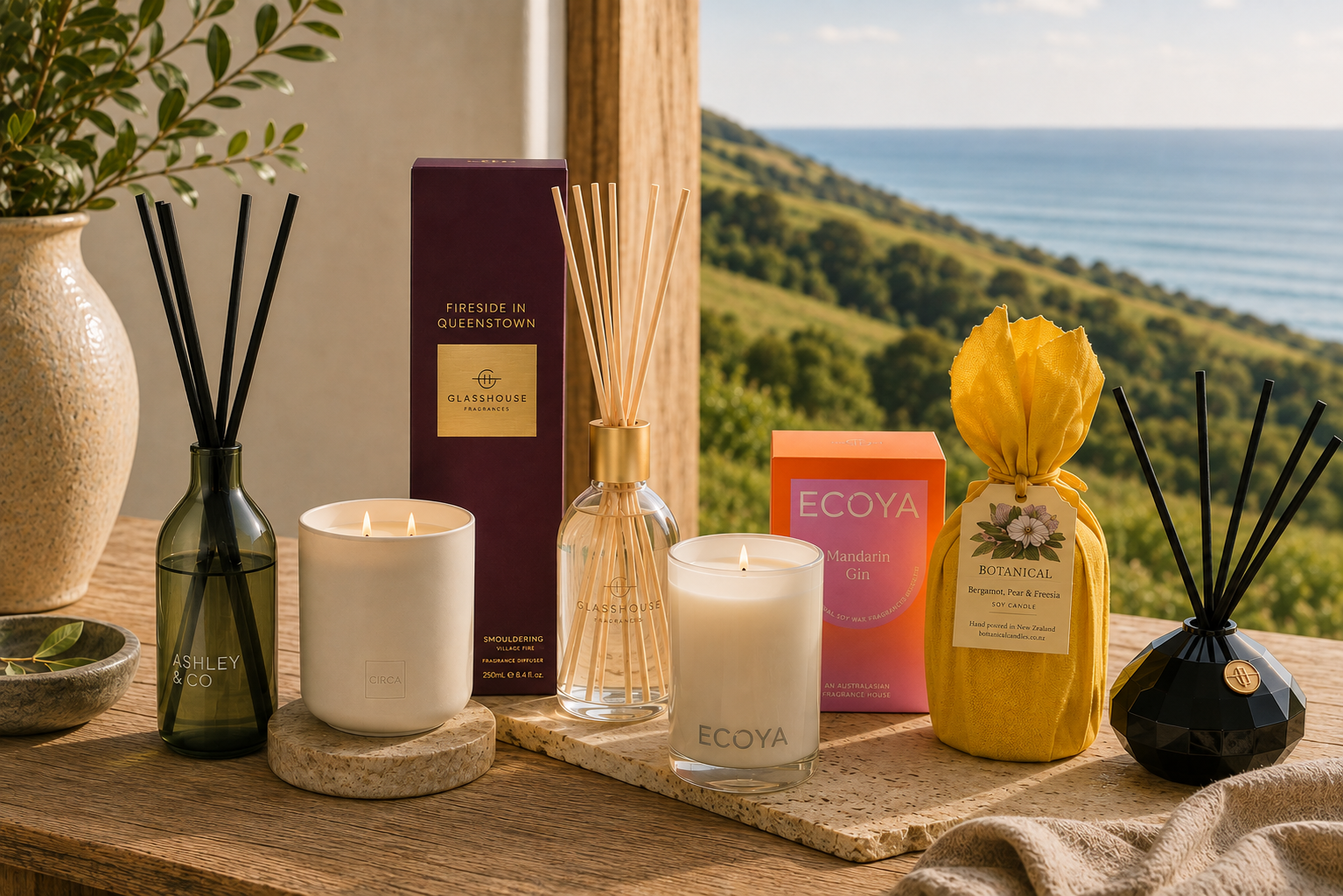
Glasshouse Fragrances is a good example of a brand deliberately designed for fragrance presence. Its Australian-made candles use a proprietary soy-blend wax, natural cotton wicks and its well-known Triple Scented formulation.
At the other end of the experience, sometimes what you’re after isn’t maximum fragrance at all. It’s something gentle, beautifully made and easy to live with.
Understanding what you want from a candle is therefore much more useful than simply looking at the price.
Candle or diffuser?
Here’s the simple version.
A candle creates a moment. A diffuser creates a background.
Lighting a candle is part of the experience. Dinner with friends, reading a book, a bath, a winter evening or simply getting home at the end of the day. You decide when the fragrance begins.
A reed diffuser quietly works away whether you’re thinking about it or not. That makes them brilliant for entrances, bathrooms, guest rooms and other spaces where you want consistent fragrance.
But they’re not necessarily competing with each other.
They can also layer.
A diffuser can provide continuity through the day, while a candle adds another level of fragrance and atmosphere when you want it.
Diffuser for continuity. Candle for atmosphere.
You can use the same fragrance in both, or stay within a similar fragrance family and create a more layered scent story throughout your home.

Don’t overlook the vessel
There’s another part of choosing home fragrance that’s easily overlooked: the thing it comes in.
A candle jar or diffuser vessel isn’t simply packaging. It’s going to sit on a coffee table, bathroom vanity, kitchen bench or bedside table, so how it looks can be almost as important as how it smells.
Some are intentionally minimal. Others are designed to be decorative objects in their own right.
CIRCA, for example, has a clean, understated aesthetic and a clever detail we particularly like: the candle lids are designed to be reused as coasters once the candle is finished.
Ashley & Co takes a different approach again, with its instantly recognisable minimalist vessels and sculptural simplicity. They sit quietly in a space without demanding attention — modern, restrained and distinctly Ashley & Co.
These details matter, particularly when you’re buying a gift. You’re not just choosing a fragrance; you’re choosing something that will become part of someone’s home.

Why you’ll find these brands at Studio Matakana
There are a lot of home-fragrance brands we could put on our shelves.
So why these ones?
When we choose a range for Studio Matakana, we’re looking for more than a nice fragrance and attractive packaging. We want brands that bring something worthwhile — whether that’s fragrance expertise, how and where something is made, thoughtful ingredients, sustainability, design, performance or simply an interesting story.
And we don’t expect every brand to tick the same boxes.
In fact, we’d rather they didn’t.
Glasshouse Fragrances brings sophisticated, perfume-inspired fragrance and impressive scent performance. Its fragrances can be bold, layered and wonderfully transportive — there’s a reason many are named after destinations around the world.
CIRCA takes a quieter approach. Its Australian-made home fragrance is designed to be beautifully uncomplicated: sophisticated enough to be interesting, but easy to have around you every day. Thoughtful design details add to its appeal.
Ashley & Co brings a distinctly New Zealand personality. Made in New Zealand, it combines original fragrance with great design and a refreshingly individual approach — right down to calling its candles Waxed Perfume and diffusers Home Perfume. Refillable options give the range another practical advantage.
ECOYA has become an Australasian home-fragrance favourite for good reason. Natural soy-wax candles, beautifully developed fragrances and excellent presentation make the range particularly easy to gift. Its B Corp certification also brings independently assessed environmental and social credentials to the story.
Botanical offers something different again. Made in small batches in Nelson, its soy candles sit naturally alongside the company’s botanical skincare and body products. It’s a genuine New Zealand maker story, with fragrances influenced by botanicals and essential oils.
And Surmanti, handcrafted in small batches in Auckland, combines pure vegan soy wax with natural fragrance oils and essential oils. Its approach sits closer to the intersection of home fragrance and wellbeing while still delivering a noticeable fragrance presence.
Different approaches. Different fragrances. Different reasons to choose them.
That’s exactly how we like it

And if it’s a gift?
Here’s probably the most useful advice we can give:
Think about the person before you think about the candle.
You might not know their favourite fragrance, but you probably know more about their tastes than you realise.
Is their home light, fresh and minimal? Something citrus, fresh or gently floral could be a good place to start.
Warm, textured and cosy? Woods, amber, vanilla or spice might be a better direction.
Do they wear a distinctive perfume? Even knowing whether they gravitate towards something fresh, floral, woody or warm can be a surprisingly useful clue.
And think about how they live.
Someone who loves creating atmosphere at home may appreciate a beautiful candle. Someone who wants their home to smell lovely without thinking about it might get more enjoyment from a diffuser.
Or pair the two.
A candle and diffuser in the same or complementary fragrance can make a beautifully considered gift — one for everyday fragrance and one for those moments when they want a little more atmosphere.
And if you really have no idea?
Don’t panic. There are fragrances with broad appeal, and that’s also where having a good range — and someone to help you navigate it — makes buying a gift considerably easier.
Ultimately, your nose knows
We can talk about soy wax, essential oils, fragrance notes, scent throw, vessels and the story behind the people who made it.
But fragrance remains wonderfully personal.
Knowing a little about what’s inside the vessel and the thinking behind it doesn’t tell you what you should like.
It simply helps you make a more informed choice.
And if you’re still standing there torn between three of them?
That’s what we’re here for.